
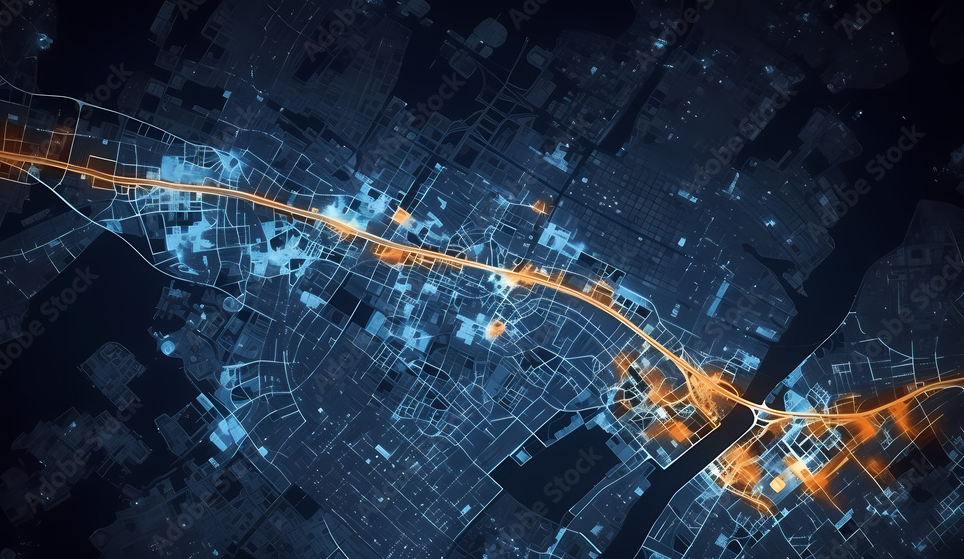
Blocktwin stands out as a pioneering company in the realm of technology by integrating geospatial mapping with advanced artificial intelligence to create detailed digital twins. These digital twins are virtual replicas of physical entities—from individual buildings to entire city infrastructures—providing a dynamic, real-time simulation environment.
Technology Integration
Geospatial Mapping
- At its core, Blocktwin uses geospatial mapping to gather comprehensive data about physical spaces using GPS, GIS, and remote sensing technologies. This data forms the foundation of the digital twin.
Advanced AI
The integration of AI is where Blocktwin truly innovates. AI algorithms analyze the geospatial data to add layers of intelligence to these digital models:
- Real-Time Data Analysis:AI processes continuous streams of data from sensors and other IoT devices integrated into the physical assets, ensuring the digital twin mirrors the current state of the physical counterpart accurately.
- Predictive Analytics:By learning from historical and real-time data, AI can predict future scenarios like equipment failure or traffic congestion, allowing for proactive management.
- Scenario Simulation:AI enables simulations where different operational strategies or environmental changes can be tested virtually. This helps in understanding the impacts without real-world risks or costs.
Applications Across Sectors
- Urban PlanningDigital twins help urban planners visualize city growth, test new zoning laws, or assess the impact of new infrastructure like bridges or public transport systems.
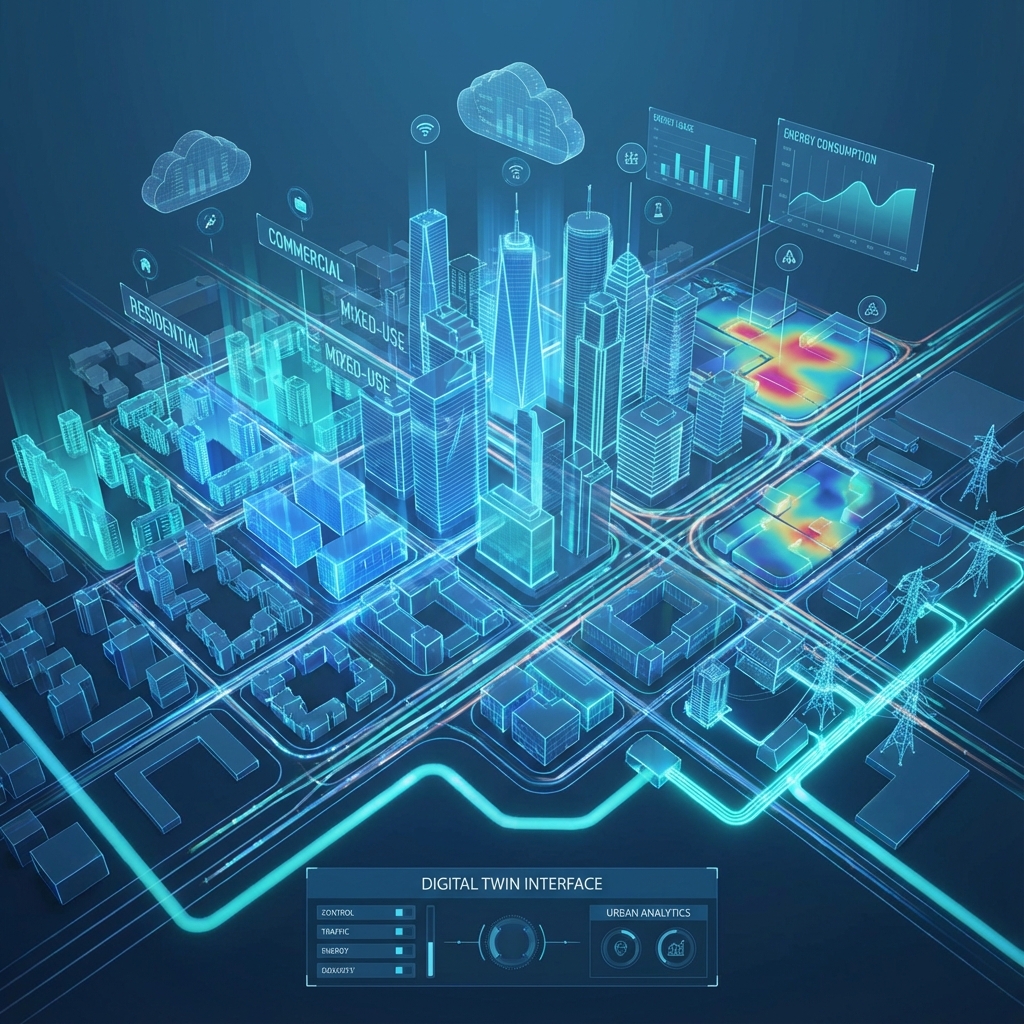
- Infrastructure ManagementFor managing bridges, roads, or utilities, digital twins provide insights into wear and tear, allowing for predictive maintenance schedules that can prevent costly breakdowns.
- Sustainability and Impact
- Concern:The environmental impact of running AI models, particularly in terms of energy consumption, is a growing ethical concern.
- Action:Blocktwin can focus on optimizing AI for lower energy use, perhaps by leveraging edge computing where possible, or by promoting the sustainability benefits of their technology (like reducing travel for inspections through virtual simulations).
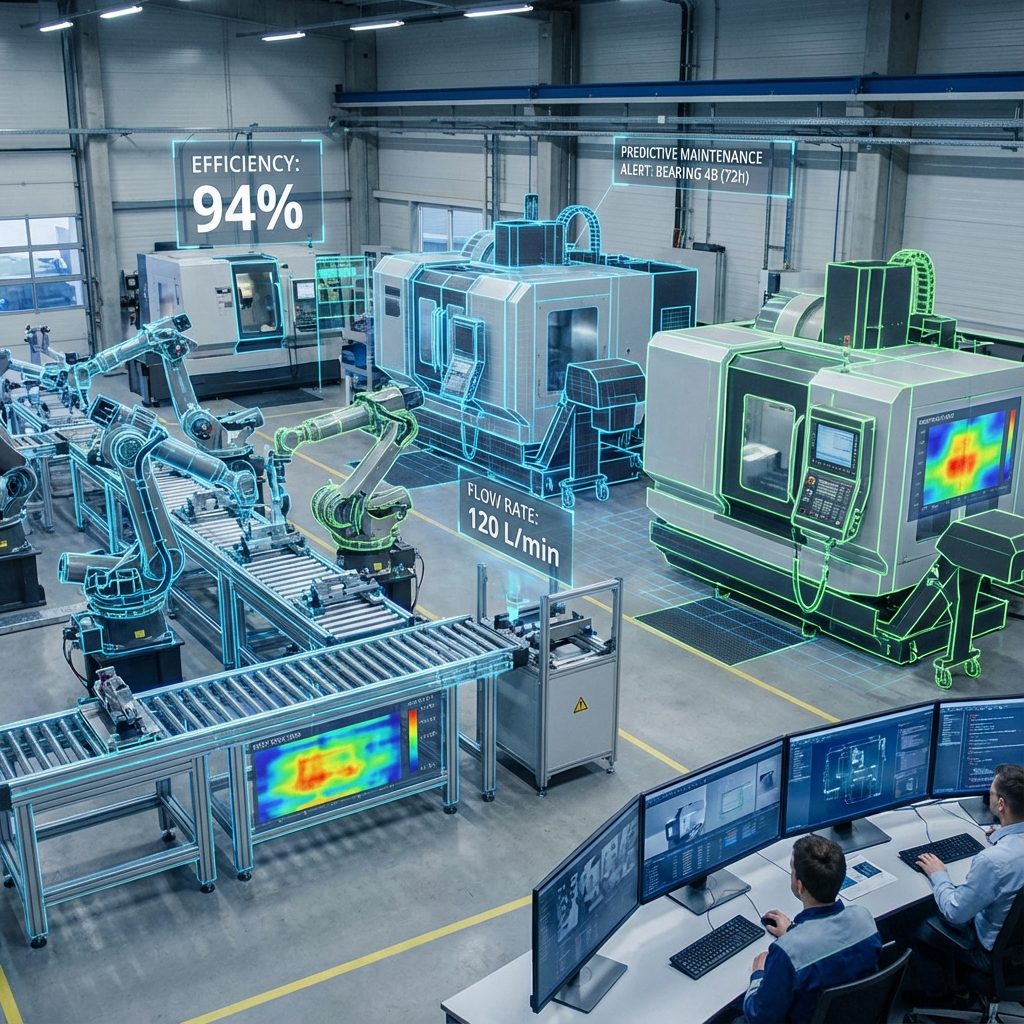
- Industrial OperationsIn manufacturing or energy sectors, digital twins can optimize plant operations, simulate production processes, or manage supply chains more effectively, leading to reduced downtime and enhanced efficiency.
Operational Benefits
- Enhanced visualizationStakeholders can see how changes might affect their assets or operations, enabling them to make data-driven decisions.
- Risk mitigationBy simulating changes in a virtual environment, companies can avoid the pitfalls of real-world experimentation, which might be costly or disruptive.
- SustainabilityThrough optimized use of resources—be it energy, water, or materials—digital twins contribute to more sustainable practices by reducing waste and minimizing environmental impact.
- Maintenance and EfficiencyPredictive maintenance reduces emergency repairs, extending the life of assets while keeping operations smooth, thereby saving time and money.
Transformational Impact
By creating an exact digital counterpart, Blocktwin enables organizations to monitor, optimize, and innovate with confidence—bridging the physical and digital worlds.
- Monitor and Management:Keep a continuous, real-time watch over their physical assets.
- Optimize:Use the simulations to find the most efficient operational strategies.
Map Your Future with Precision
Experience the power of AI-enhanced geospatial digital twins.See how Blocktwin can transform your operations today.
Contact Us